Massage Gun Buying Guide: Amplitude, Speed and Attachments
Stroke length, speed settings, heads and battery. A no-nonsense guide to choosing a percussion massage gun, with three Thrum models compared.
- Amplitude (stroke length) decides how deep the gun reaches; speed decides how fast it taps.
- Attachments matter because different heads suit different muscles.
- Battery, noise and weight decide whether you actually use it.
- Avoid bones, joints, the front of the neck and any painful or injured area.
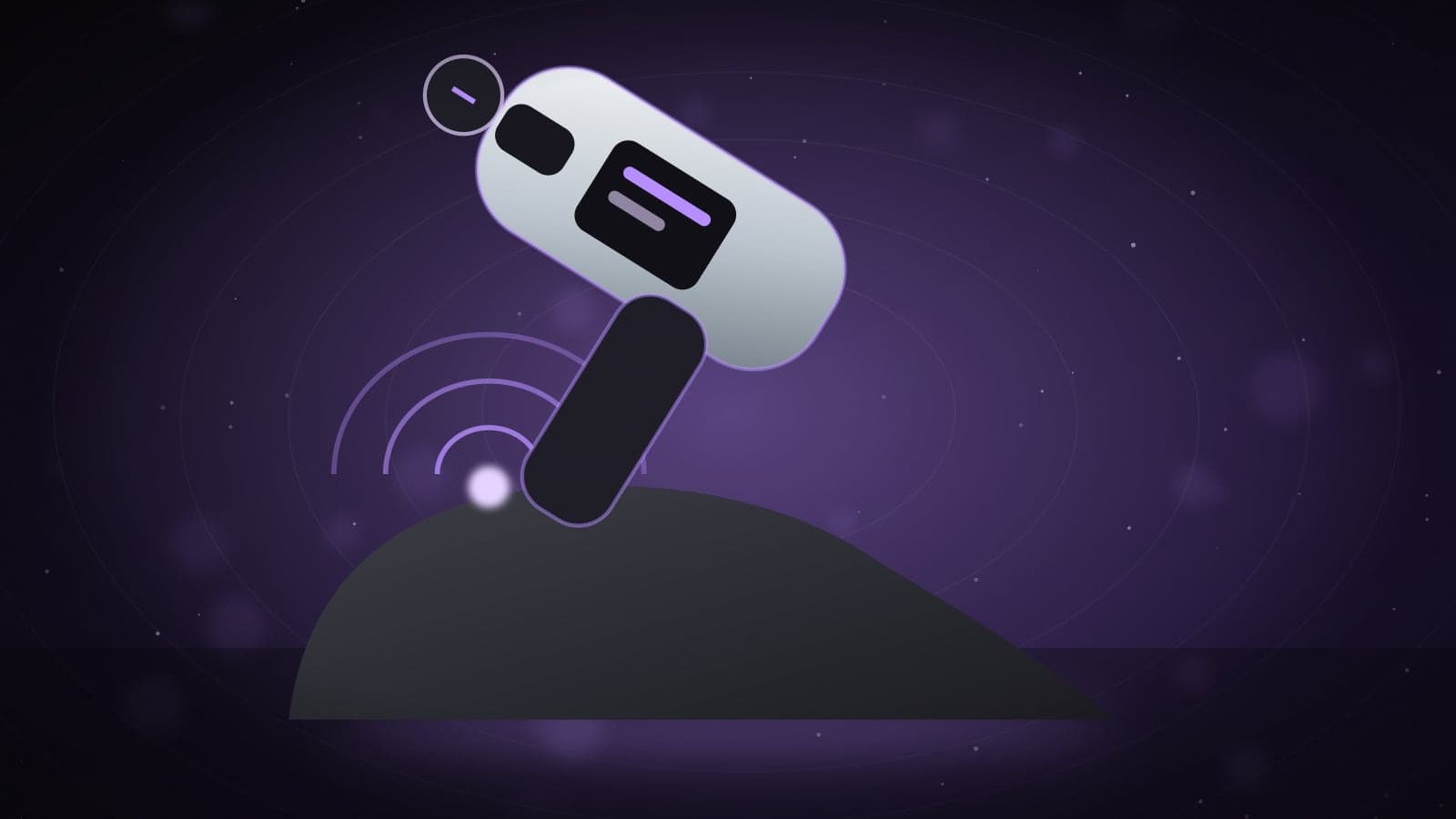
Illustration of a percussion massage gun pressing into a muscle
Three terms worth knowing
Most people do not need the biggest numbers. They need a gun that feels good, runs quietly and is easy to hold.
Three Thrum models compared
The Thrum Lite is compact and travel-friendly, with four heads, a hot and cold head and USB Type-C charging. The Thrum Pro is the professional all-rounder, with 30 speeds up to 3,200+ RPM, an LCD display and four interchangeable heads. The Thrum Deep is built around a 12 mm stroke and a brushless motor for deep-tissue feel, with three speed settings.
If you are not sure, a mid-range stroke with plenty of speed settings is the most forgiving. A deep-stroke gun is wonderful for big muscles but can feel intense on smaller ones.
Using it well
Glide slowly over muscle bellies, one area at a time, for about 30 to 60 seconds. Let the gun do the work and do not press hard. Avoid bones, joints, the front of the throat, and any area that is swollen, bruised or painful. If you are pregnant, have a clotting disorder or take blood thinners, ask your doctor first.
Which Thrum for which person?
The traveller or casual lifter: the Thrum Lite fits in a gym bag, charges by Type-C and the hot and cold head adds variety.
The serious trainer or practitioner: the Thrum Pro gives you 30 speeds so you can go from a light warm-up to a firmer finish, plus an LCD that shows what you are doing.
The person with big, dense muscles: the Thrum Deep, with its 12 mm stroke, reaches more deeply into quads, glutes and upper back.
If you buy one gun for a shared space, such as a studio, the Pro is the safest all-rounder. Keep a spare set of heads and wipe them down between users.
Technique: a minute per muscle
Turn the gun on before you place it on your body, start on a low speed and glide slowly. Spend about 30 to 60 seconds on large muscles like quads, glutes, calves and upper back. Pause on tight spots without pushing hard.
Use the right head for each area: a round head for large muscles, a flat head for broad areas and a bullet or fork head for precise spots (check the manual for what each head is designed for). The Thrum Lite includes a hot and cold head too.
Avoid bony areas, joints, the front of the neck, the spine itself and any injured or swollen area.
Noise, weight and battery
These are the unglamorous details that decide whether you use it. A loud, heavy gun gets left in the cupboard, so check the weight, the grip and the noise level if you can. Battery life and charging matter too, and Type-C charging is convenient for travel.
For a clinic or gym, buy one or two robust units and consider a spare charged battery or second device. Our clinic equipment guide and compression boots guide show how guns fit alongside other tools.
Hold the gun in the hand you will use most and imagine reaching your own upper back. If it feels awkward in the shop, it will feel worse after a workout.
Where it fits in a routine
A massage gun is perfect before a workout to warm up and after it to relax. It pairs nicely with compression boots on the legs, and with handheld red light devices on small areas. We map all of this in the post-workout recovery stack.
For a gym or clinic, guns are a low-cost, high-impact add-on. See equipping a physio or chiropractic clinic and browse our Relax collection.
Frequently asked questions
What amplitude should a massage gun have?
Mid-range amplitudes suit most people. Deeper strokes, like the 12 mm stroke of the Thrum Deep, reach large muscles more deeply but can feel intense on smaller ones.
How long can I use a massage gun on one muscle?
Typically 30 to 60 seconds per area. Avoid overusing a single spot, and stop if it feels painful.
Is a massage gun good before or after a workout?
Many people use one before to warm up and after to relax. Keep pre-workout use brief and light.
Can a massage gun replace a physiotherapist?
No. It is a wellness tool for general relaxation. If you have an injury or persistent pain, see a healthcare professional.
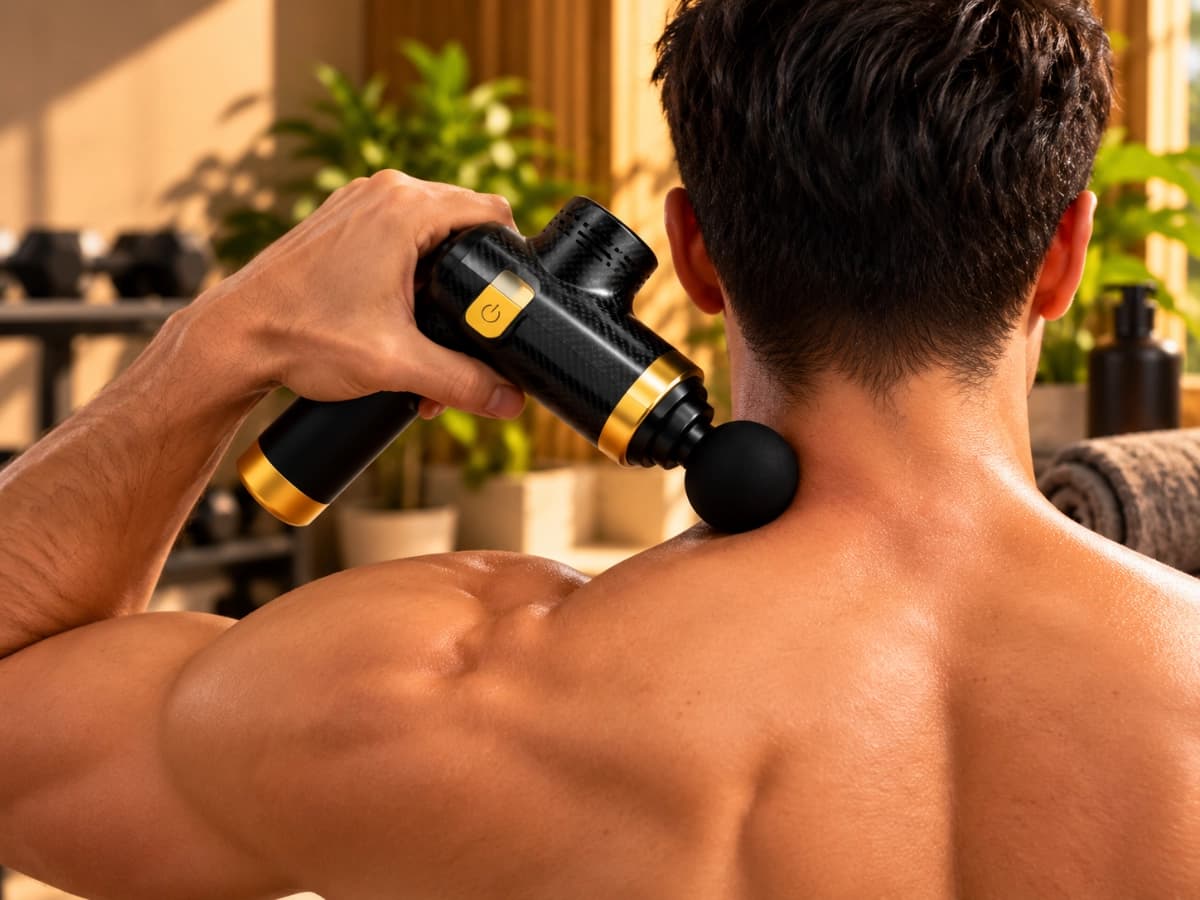
Thrum Pro Professional Massage Gun (30 Speed)
30 speeds up to 3,200+ RPM and an LCD display.
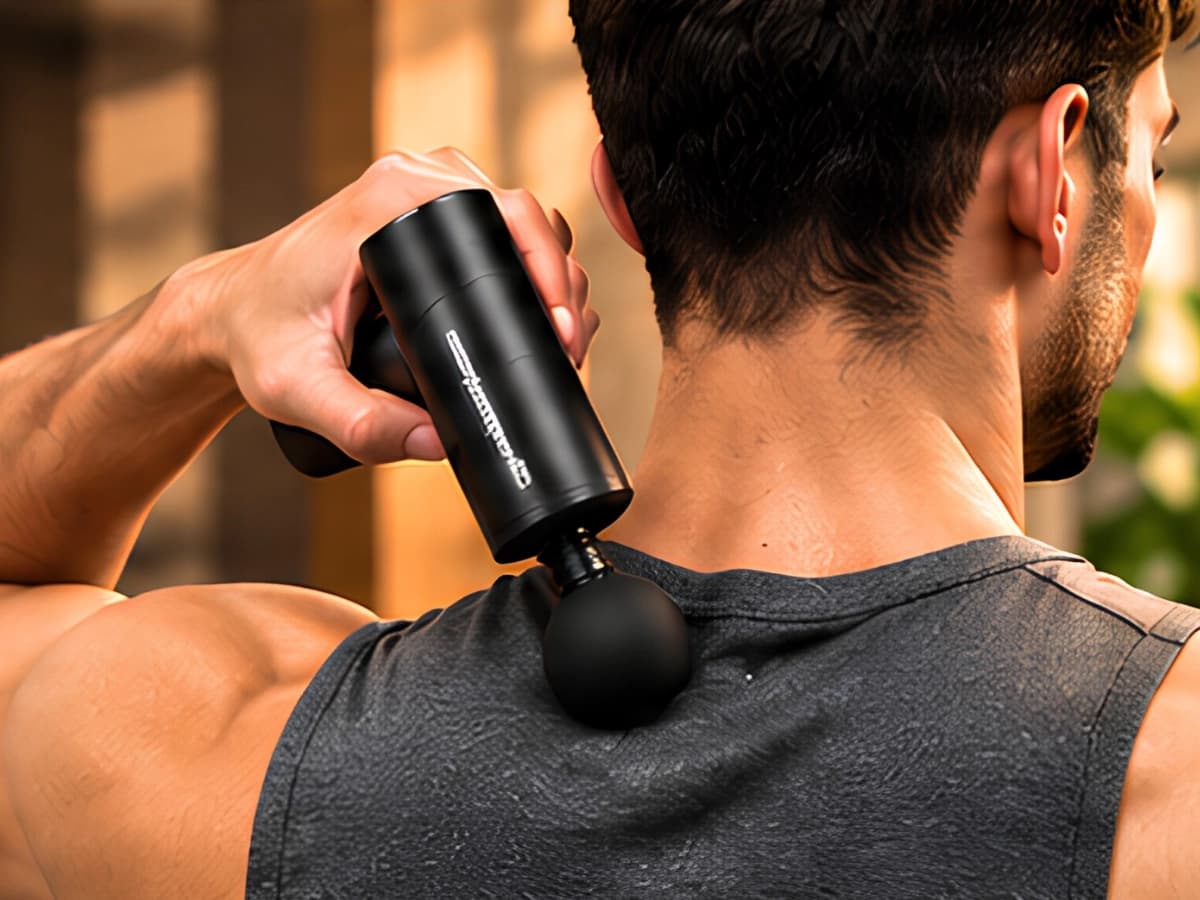
Thrum Lite Massage Gun
Compact gun with a hot and cold head and Type-C charging.
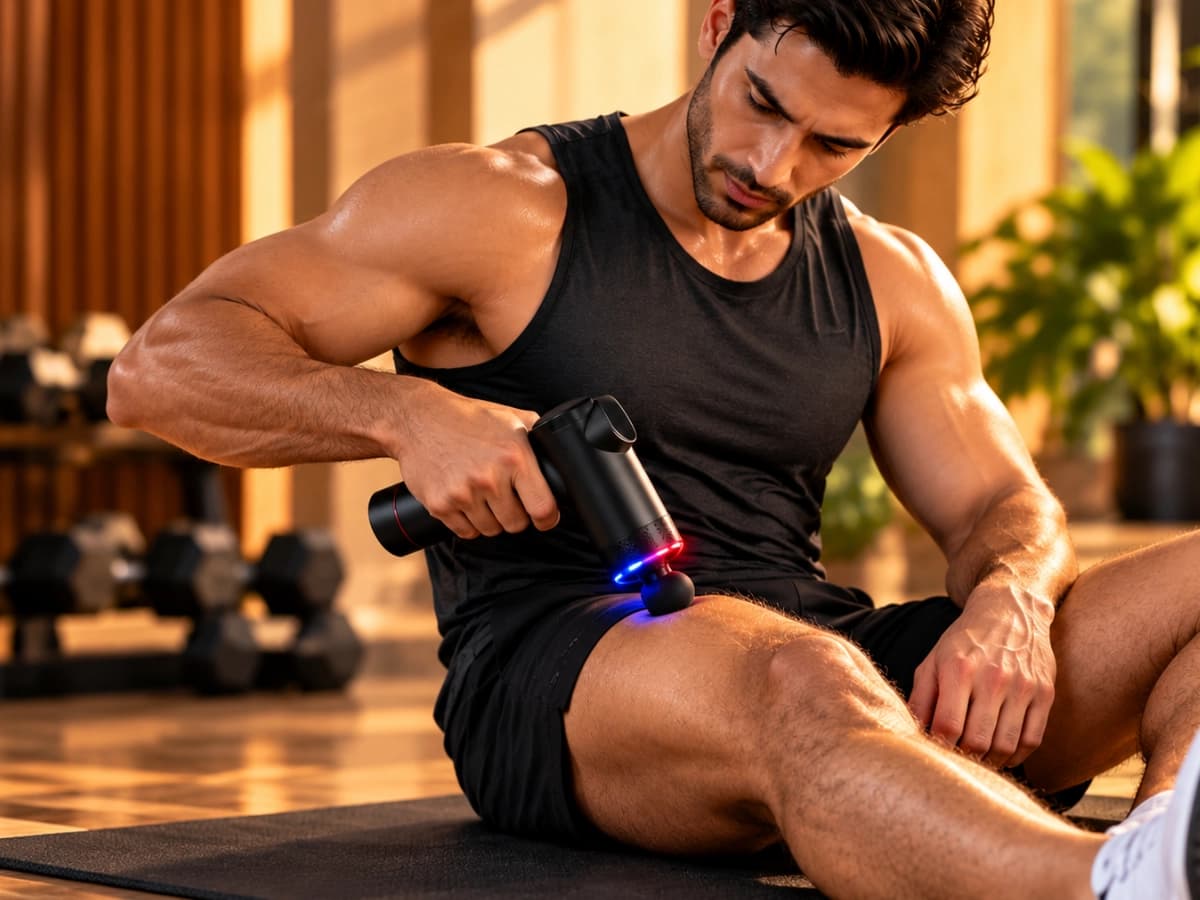
Thrum Deep Deep Tissue Massage Gun (12 mm)
Deep-amplitude 12 mm stroke for big muscle groups.
Planning a recovery suite or commercial wellness facility?
GreenPulse provides space layout planning, product selection, electrical planning, installation and team training for your space.
Related Perspectives
The Post-Workout Recovery Stack: What to Use, in What Order
Heat, cold, light, compression, massage. How to string recovery tools into a simple routine you will actually follow, at home or in a studio.
Air Compression Boots: What They Do and Who Should Use Them
Compression boots are one of the most popular recovery tools for runners, lifters and desk workers alike. Here is how they work, what to look for and which model suits which person.
Handheld Red Light and Laser Devices: Where They Fit
Wands, 4-in-1 devices and scalp caps put light where you want it. Here is how they differ from panels and masks, and how to use them safely.