Air Compression Boots: What They Do and Who Should Use Them
Compression boots are one of the most popular recovery tools for runners, lifters and desk workers alike. Here is how they work, what to look for and which model suits which person.
- Compression boots inflate and release in sequences, a bit like a rolling massage up the leg.
- Chamber count, pressure range, wireless design and programmes are the main things that separate models.
- They are popular with athletes, people who stand all day and anyone who simply enjoys leg relaxation.
- Not for everyone. Check with your doctor if you have circulation concerns before using them.

Illustration of a pair of segmented air compression boots with a control unit
How compression boots work
Think of a very patient masseuse who never gets tired. Air compression boots wrap your legs in a series of inflatable chambers. A pump inflates them one after another, usually from the foot upward, then releases. The sequence repeats for the length of a session, typically 20 to 30 minutes.
People use them after training, long days on their feet or travel. The experience is relaxing and many people nod off in them. We make no medical claims, but we do hear regularly that they feel great.
What to compare
Who they suit
Runners, cyclists and gym-goers love them as part of a post-training routine, which we map out in our post-workout recovery stack. Office workers and frequent flyers like them for tired legs. For businesses, they are an affordable add-on that can be offered in short, bookable sessions, which makes them a staple of every recovery lounge.
If you run a studio, compression boots are one of the easiest ways to offer a recovery service without big space or installation needs. Several pairs can run in the same room.
Who should check first
Compression is not appropriate for everyone. If you have deep vein thrombosis, clotting concerns, severe circulation problems, skin infections or open wounds on the legs, or you are pregnant, ask your doctor before using compression boots. Start at a low pressure and increase gradually. Stop if you feel pain, numbness or tingling.
Getting the most from a session
Sit or lie back with your legs supported, ideally slightly raised. Start on a low pressure and a standard programme, and increase gradually if you feel comfortable. Sessions are typically 20 to 30 minutes, and most units have a timer so you can relax without watching the clock.
Wear thin, comfortable clothing under the boots, and keep the hoses free of kinks. Charge wireless units fully beforehand. Many people use boots while reading, working or watching something, which is a big reason they actually stick with it.
Pressure is not a competition. Higher mmHg does not automatically mean better. The PulseWave Pro 6 reaches 260 mmHg, and the PulseWave Go tops out at 150 mmHg. Choose the range that feels good for you.
If something feels painful, tingly or numb, stop and deflate the boots. Comfort is the signal to follow.
Travel, desk days and standing jobs
Compression is not just for athletes. Frequent flyers, retail staff, teachers, nurses and desk workers often enjoy a session at the end of a long day. Compact models like the PulseWave Ease (about four hours of battery) and the PulseWave 5 travel well.
For older users, gentle settings and supervision are key, and a doctor's advice comes first. We talk about this in wellness lounges for senior living.
Building boots into a routine
Boots are most satisfying as part of a ritual. Put them on after training, while you stretch, or on rest days with a book. Pair them with other tools as described in the post-workout recovery stack, and consider a massage gun for tight spots before you strap in.
Choosing between models? Read 4 vs 6 vs 8 chambers before you decide.
Where to go next
Ready to narrow it down? Read the chamber-count comparison. If you love the idea of a complete routine, pair boots with a massage chair or massage gun. For a ready-made set-up, see our combos, the Rehabilitate solutions and the complete compression range.
Frequently asked questions
How long should I use compression boots?
Typically 20 to 30 minutes per session, depending on the programme and the supplied guidance. Start shorter and lower if you are new to them.
Can I wear compression boots every day?
Many people use them several times a week. Daily use depends on your comfort and any advice from your doctor. Listen to your body and stop if anything feels wrong.
Are compression boots safe for everyone?
No. Anyone with clotting concerns, deep vein thrombosis, severe circulatory problems, infections or open wounds on the legs, or who is pregnant, should ask a doctor first.
What pressure should I use?
Start low and increase gradually to a level that feels firm but comfortable. Our boots range from about 30 to 260 mmHg depending on the model.
Can compression boots be used in a business?
Yes. They are a popular, low-footprint service for gyms, clinics and spas. See our recovery lounge guide for planning and pricing.
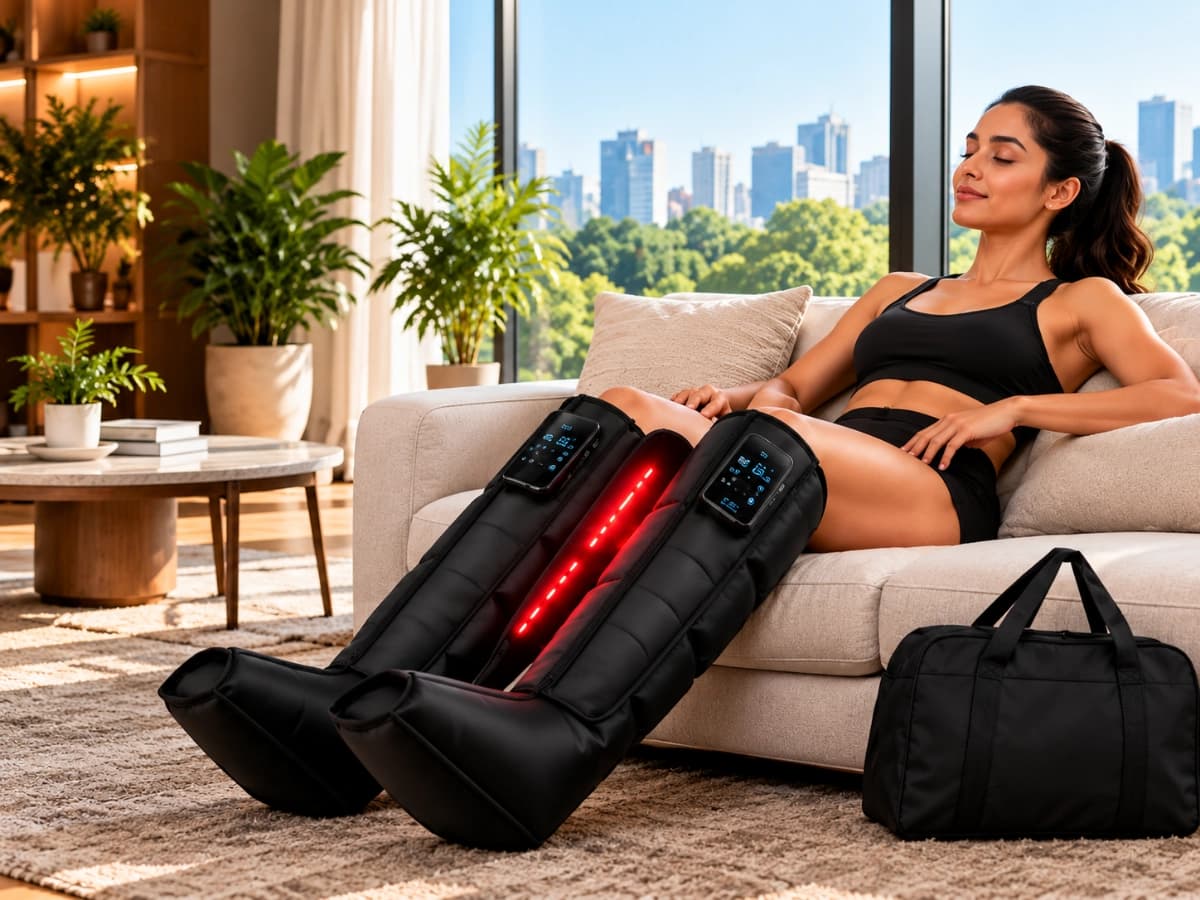
PulseWave Go Wireless Air Compression Boots
Wireless boots with five overlapping chambers and 50–150 mmHg.
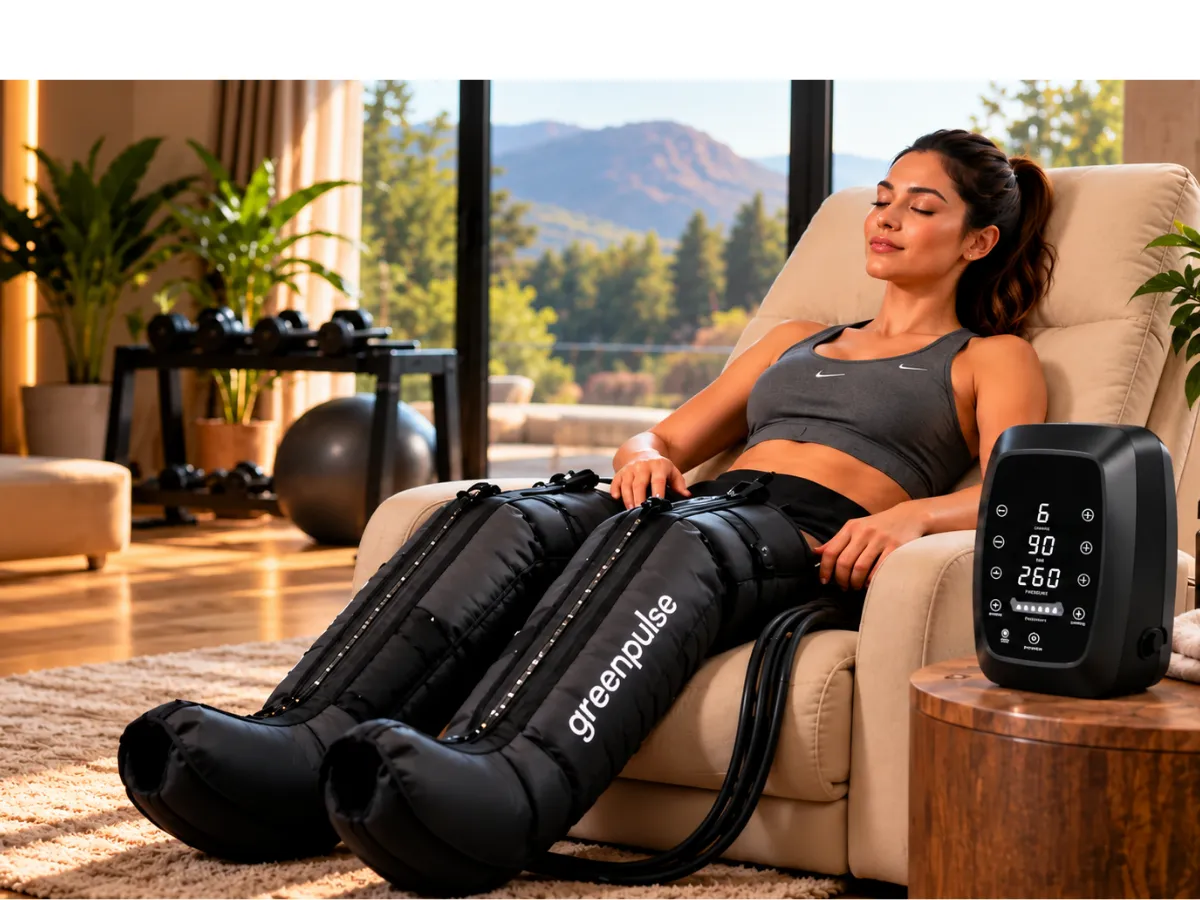
PulseWave Pro 6 Air Compression Recovery System (6-Chamber)
Professional six-chamber system with app control and 30–260 mmHg.
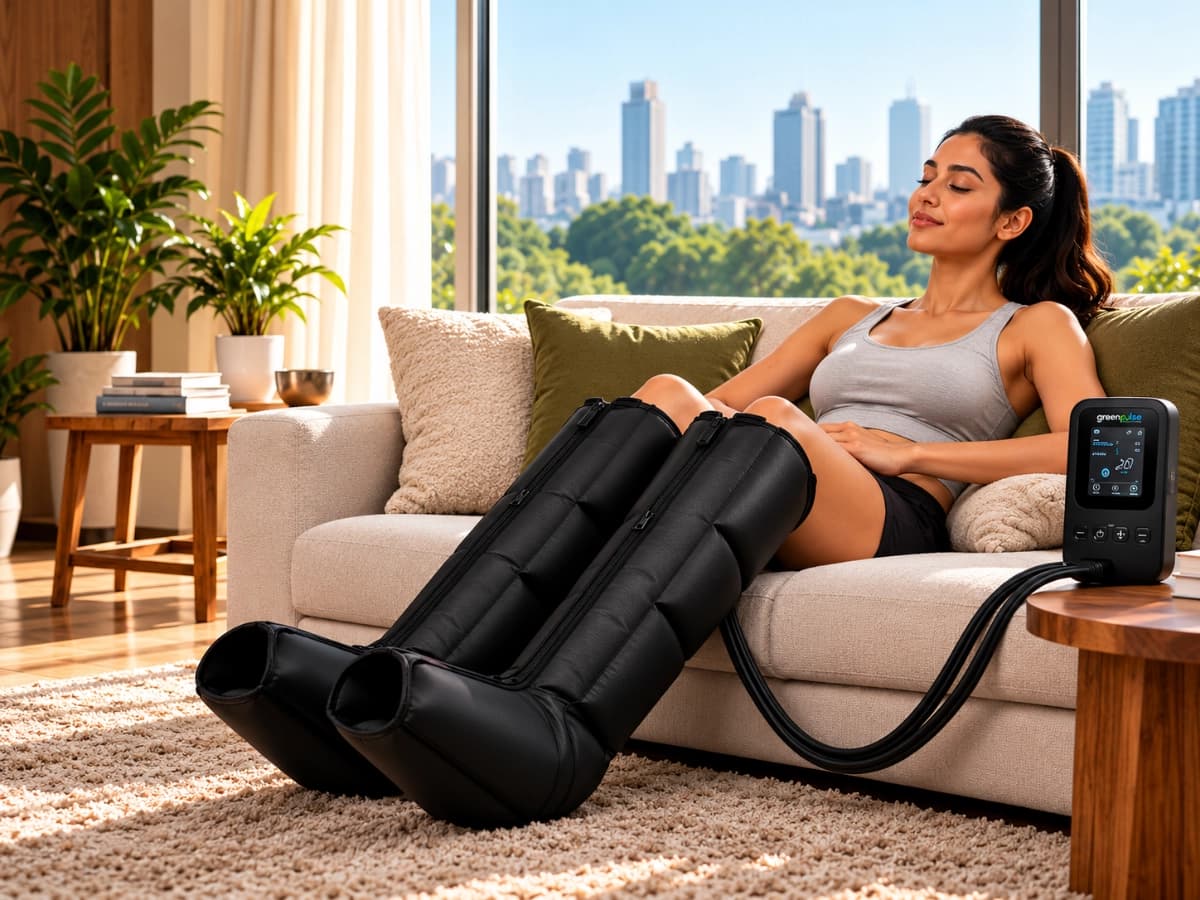
PulseWave Ease Air Compression Leg Massager
Compact, rechargeable leg massager for home and travel.
Planning a recovery suite or commercial wellness facility?
GreenPulse provides space layout planning, product selection, electrical planning, installation and team training for your space.
Related Perspectives

4, 6 or 8 Chambers? Choosing Compression Boots Without the Guesswork
More chambers is not automatically better. Here is what chamber count, pressure and format really change, and which PulseWave model fits which buyer.

The Post-Workout Recovery Stack: What to Use, in What Order
Heat, cold, light, compression, massage. How to string recovery tools into a simple routine you will actually follow, at home or in a studio.
Massage Gun Buying Guide: Amplitude, Speed and Attachments
Stroke length, speed settings, heads and battery. A no-nonsense guide to choosing a percussion massage gun, with three Thrum models compared.