Electric vs Standing Wheelchairs: How to Choose Mobility Equipment
Foldable, lightweight, pediatric or sit-to-stand? A calm, practical guide to the questions that matter when choosing an electric wheelchair for yourself, a relative or a care setting.
- Start with the person: how they move, where they go, how they travel and who helps them.
- Weight and fold size decide whether a chair fits in a car boot or a lift.
- Sit-and-stand chairs add function but also complexity. Involve a clinician in the decision.
- Check battery range, charging, service and spare parts before you buy.
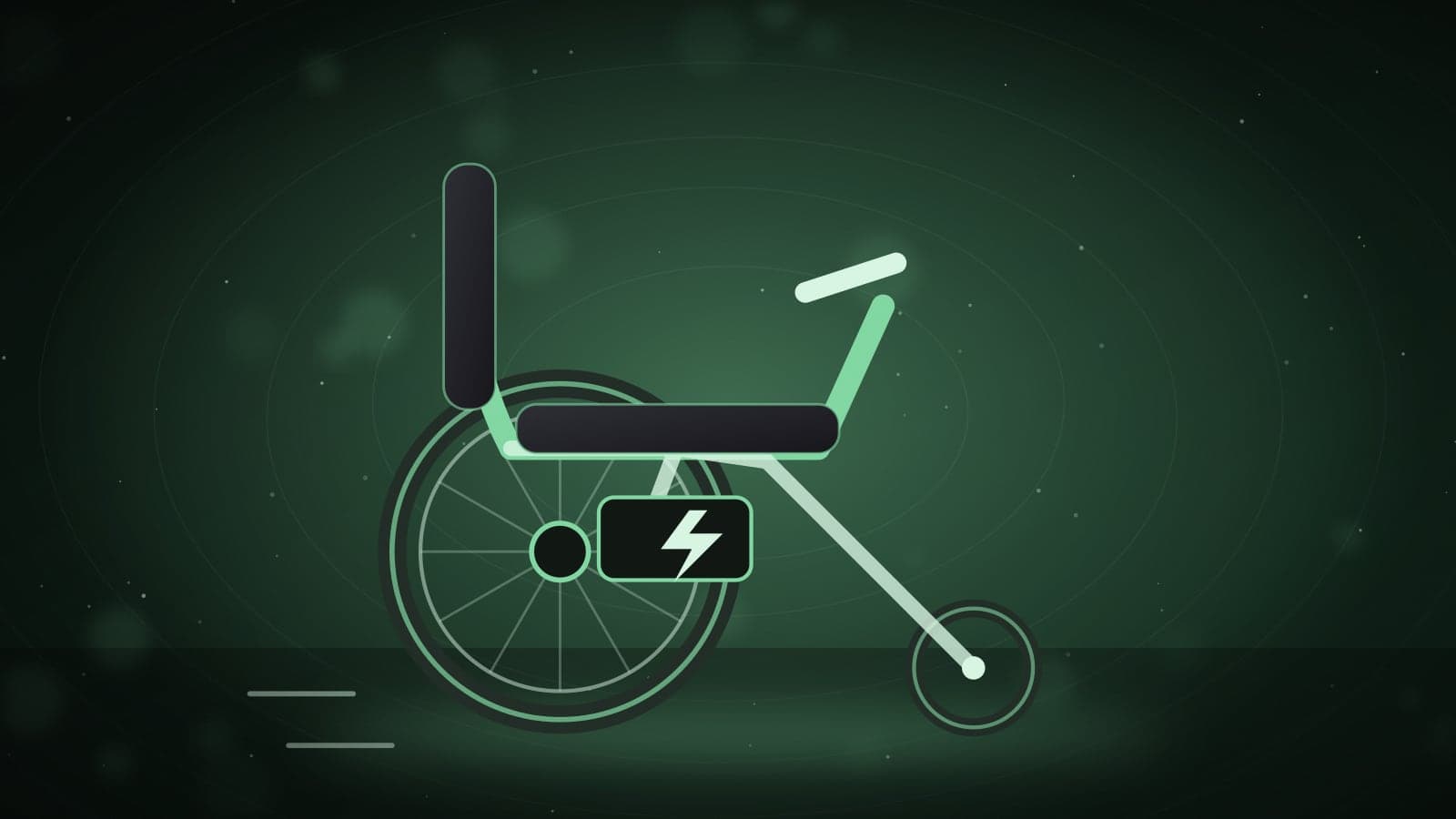
Illustration of an electric wheelchair with a battery pack and large rear wheel
Start with the person, not the chair
Choosing a wheelchair is a personal decision. Think about how the user moves day to day, where they need to go (home, shops, outdoors), how they will travel and who will be helping them. A clinician, occupational therapist or physiotherapist can advise on fit and prescription, and we recommend involving one.
Foldable and lightweight chairs
For people who travel or have limited storage, folding chairs make life easier. The Glide Trek 1 is a compact folding electric chair at 22 kg with 250 W × 2 motors and a choice of 6 Ah or 10 Ah lithium battery. The Glide Trek 2 has an aluminium frame, 12-inch rear wheels, 22.4 kg weight and up to 15 km range.
The Glide Flex offers an X-Fold design with seat height adjustable from 570 to 720 mm, a 20 Ah lithium battery and a 159 kg capacity. The Glide Core is an ergonomic folding chair with a range of up to 20 km and a 45 cm seat (51 cm optional).
Measure the car boot, the lift and the narrowest doorway at home. Check the folded dimensions and the weight of the heaviest single component.
Sit-and-stand chairs
Standing chairs let users change position, reach higher and engage with the world at eye level. The Rise 2 is a sit-and-stand chair with a widened anti-rollover chassis and 360° joystick. The Rise 3 is a 5-in-1 chair that can lift to one metre, stand, recline to lie flat and tilt, with a self-locking safety system. The Rise 1 is a heavy-duty electric standing chair with a 48 V, 600 W motor.
These are more complex, and a clinician should confirm suitability and set-up. Standing is not appropriate for everyone.
For younger users
The Glide Junior is a compact electric chair for junior users, with brushless motors and a folded size of 69 × 45 × 77 cm. Growing children need regular fit checks, so involve the care team.
Trying before buying, and what to measure
If possible, test a chair in the places it will be used: at home, in the car boot, at the front door and on the usual route. Check turning space, doorway width, ramp or kerb height and how easy it is to transfer in and out.
Comfort at the destination matters as much as comfort on the move. If the chair is for someone who loves to relax after an outing, a quiet, seated massage chair in the lounge is a lovely end to the day.
Measure the user (seat width, depth, back height and weight), the chair's folded size, and the car or lift it must fit. Check the maximum user weight (the Glide Flex, for example, lists a 159 kg capacity) and the battery range under real conditions.
Maintenance, batteries and support
A wheelchair is something people rely on every day, so plan for upkeep. Ask about battery life and replacement, tyres, controllers and spare parts, and who services the chair locally. If you are buying for an organisation, see our guide to warranty and after-sales support.
Think beyond the chair. Where will it be stored and charged? How will the user get to the places they enjoy? A comfortable lounge or garden is a great destination, which is why we cover it in wellness lounges for senior living. For hotels and venues, the hotel suite guide touches on accessibility.
Explore the mobility range or ask our team about the AgeWell solution.
Keep a spare charger at the user's usual destination (a relative's home, a day centre) so range anxiety never limits outings.
Battery, service and support
Check the range under real conditions (hills, passenger weight, weather), how the battery is charged and replaced, and who services the chair. For organisations buying several chairs, read our guide to warranty and after-sales support. Mobility works best with a comfortable destination, which is why we link it with our senior living wellness lounge guide. Browse the mobility range.
Frequently asked questions
How do I choose between a foldable and a standing wheelchair?
Foldable chairs prioritise portability and storage. Standing chairs add the ability to change position but are bulkier and more complex. A clinician can advise which suits the user.
How far can an electric wheelchair go on a charge?
It depends on the model, battery and conditions. Listed ranges include up to 15 km for the Glide Trek 2 and up to 20 km for the Glide Core. Hills, weight and terrain reduce range.
Can an electric wheelchair be taken in a car?
Many folding models can, but check the folded dimensions and the weight of the heaviest component. The Glide Trek 1 weighs 22 kg and the Trek 2 weighs 22.4 kg.
Is there a wheelchair for children?
Yes. The Glide Junior is a compact electric chair for junior users. Because children grow, involve their care team and review the fit regularly.
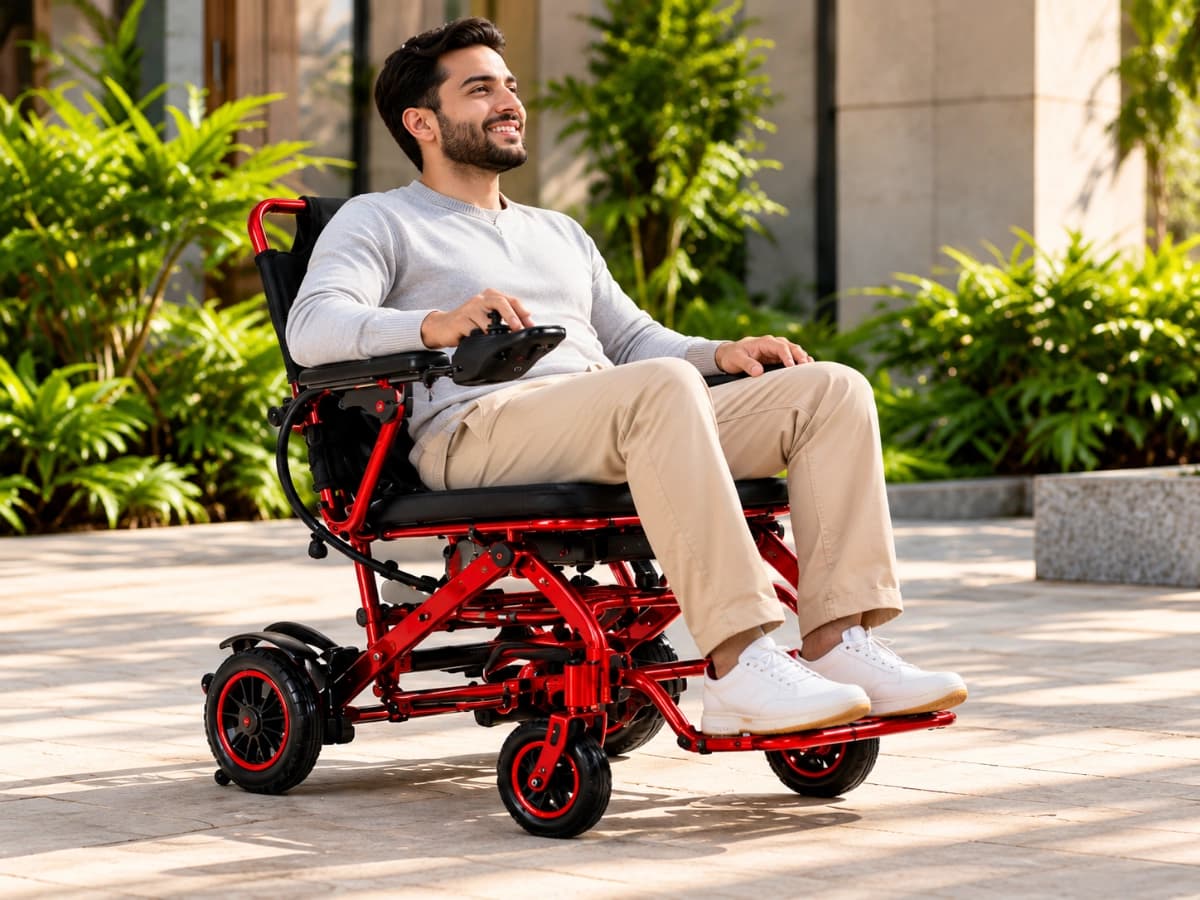
Glide Trek 1 Electric Wheelchair
Compact folding electric chair at 22 kg with lithium battery options.
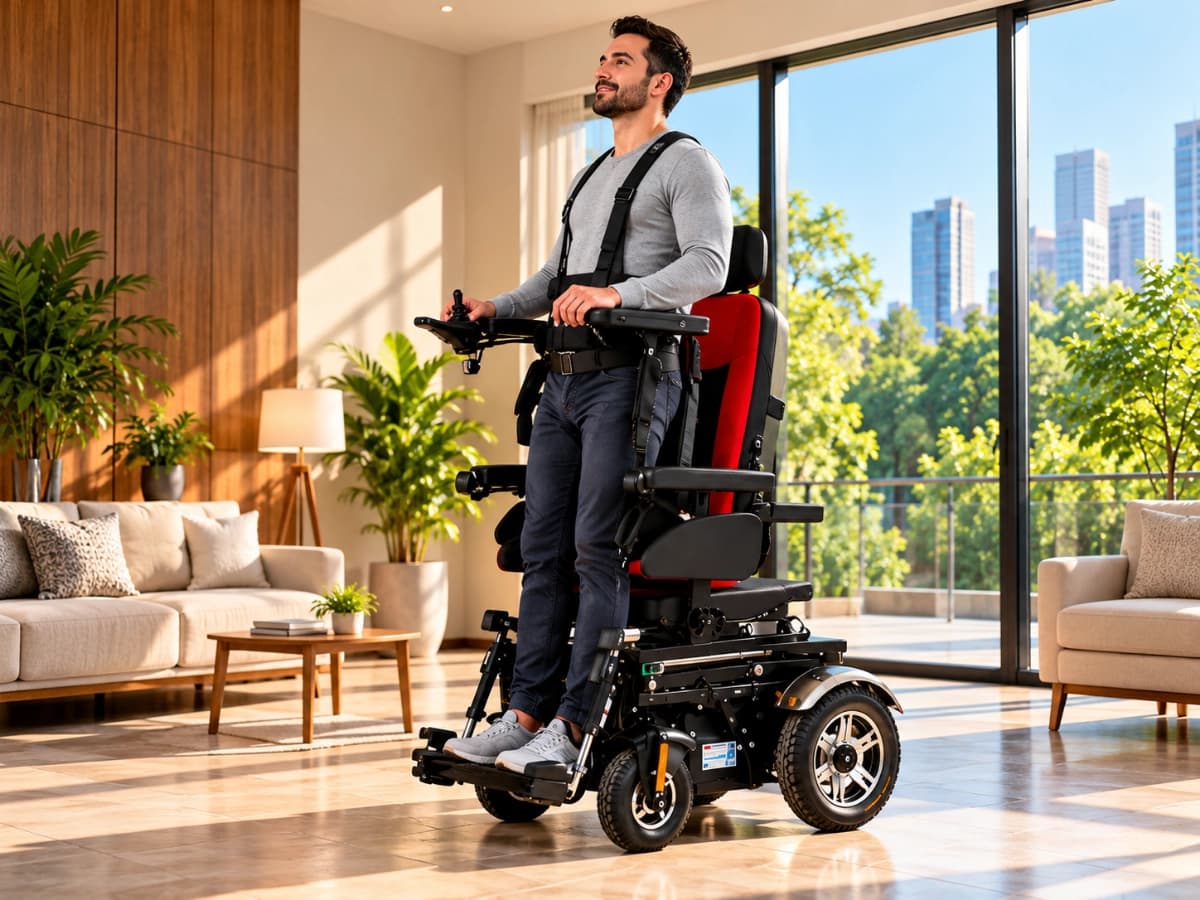
Rise 3 Standing Wheelchair
5-in-1 electric standing chair that lifts to one metre.
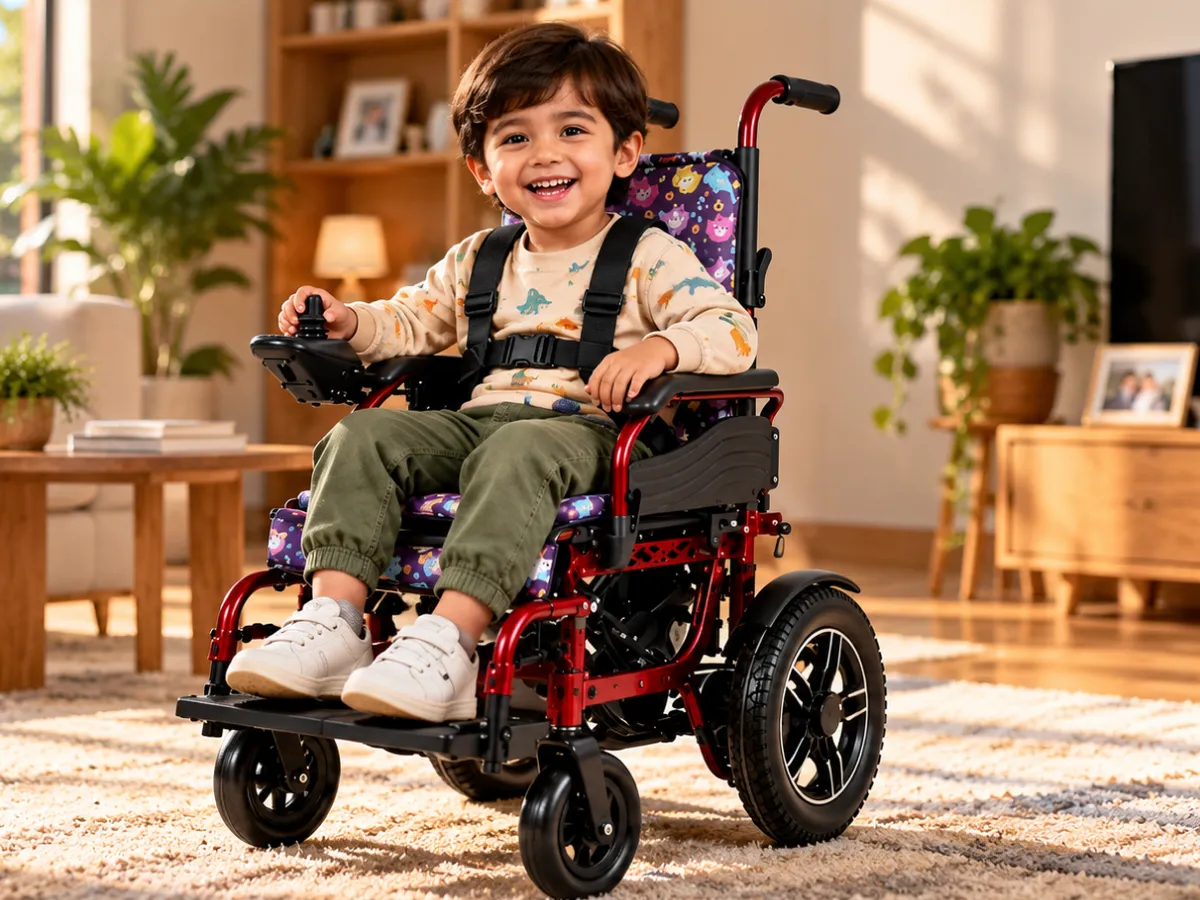
Glide Junior Pediatric Electric Wheelchair
Compact electric chair for junior users.
Planning a recovery suite or commercial wellness facility?
GreenPulse provides space layout planning, product selection, electrical planning, installation and team training for your space.
Related Perspectives

A Wellness Lounge for Senior Living: Gentle Equipment Residents Will Use
How senior living communities and homecare providers can add a calm wellness lounge: gentle equipment, safe layouts, staff routines and the mobility tools that tie it together.
Massage Chair Buying Guide: SL Track, 3D, 4D and Zero Gravity
SL track, 3D, 4D, zero gravity. What do these terms mean, and which massage chair actually suits your body, your room and your budget?

Buying Wellness Equipment: Installation, Warranty and Support
What to ask before buying wellness equipment for a business: total cost, installation, training, spare parts and who picks up the phone when something needs attention.